Blog
RSS FeedGuides, research, and practical tactics for document review, AI visibility, and structured feedback.

Why Your Organic Traffic Is Dropping: Find the Layer That Changed First
Organic traffic drops when demand, rankings, CTR, analytics, technical health, competitors, or AI answer surfaces change. Find the layer that moved first.
By Bijan Bina
The reviewer is being punished because the system forgets their work
Why AI content review becomes a bottleneck when teams count shipped output but lose the judgment behind careful review.
By Bijan Bina
How to Track AI Search Traffic in GA4 Without Lying to Yourself
Track AI search traffic in GA4 with a weekly signal board for assistant sessions, Google AI surfaces, logs, UTMs, Direct, and prompt checks.
By Bijan Bina
Slop Is a Feedback Infrastructure Problem, Not Only a Model Problem
AI slop keeps returning when review fixes a draft but fails to preserve findings, decisions, and rules future work can load.
By Bijan Bina
Social OS Starter: the control surface before the post
Learn why a Social OS starter needs source intake, voice rules, claim boundaries, approval packets, and decision memory before scheduled posts.
By Bijan Bina
Folder-as-program is not one more instruction file
Folder-as-program: structure agent-ready folders with entry files, source truth, state, tools, checks, outputs, and human decisions.
By Bijan Bina
Semrush Keyword Workflow for GEO: Turn Rows Into Page Work
Turn Semrush keyword, competitor, AI Overview, and prompt-tracking data into GEO page jobs, source checks, internal links, and retests.
By Bijan Bina
Perplexity Citations: What We Know and What to Improve
Learn what Perplexity documents about citations, what remains unknown, and how to audit access, source passages, and prompt results.
By Bijan Bina
How to review AI product descriptions against product records
Review AI product descriptions by checking source records, claim proof, search fields, buyer promises, and decisions the next draft can inherit.
By Bijan Bina
How to review AI social content before it reaches the queue
Review AI social posts for platform fit, claim support, disclosure risk, visual context, brand voice, CTA truth, and reusable review memory before approval.
By Bijan Bina
Engineers Using AI for Docs Need Source-Truth Review
AI-generated API docs can look complete before they are source-true. Here is the review record teams need before AI docs count as done.
By Bijan Bina
ESLint for content: make editorial rules loadable
Make editorial standards machine-readable without pretending every prose judgment is a lint error. See where rules stop and review memory starts.
By Bijan Bina
Detecting AI Slop During Review: Check What the Draft Can Prove
Detect AI slop by checking proof, source fit, filler, example provenance, CTA support, and the review finding that should survive.
By Bijan Bina
Editor-level review vs governance-level review: the reason is the asset
Editor-level review fixes the draft in front of you. Governance-level review preserves the finding, decision, and rule future reviewers or agents can reuse.
By Bijan Bina
Content Quality Metrics Should Measure the Review System
Content quality metrics are useful when they show what review checked, what decision changed, and what the next draft can inherit.
By Bijan Bina
Cross-model AI content review is critique, not a review record
Cross-model review can pressure-test AI writing, but accountable review starts when critique becomes a finding, evidence, decision, owner, status, and reusab...
By Bijan Bina
Content governance maturity model: what survives review?
Use a practical content governance maturity model to see whether review feedback survives as findings, decisions, rules, and rulepacks.
By Bijan Bina
Content QA-as-Code Starts When Review Decisions Become Loadable
Content QA-as-Code turns review findings, decisions, rules, and exports into loadable memory for the next draft, reviewer, agent, or check.
By Bijan Bina
A Content Governance Framework for AI Starts With Review Memory
Turn AI content review into findings, decisions, rules, and rulepacks so the next draft can inherit what reviewers already decided.
By Bijan Bina
Healthcare E-E-A-T Checklist: 6 Gates for AI Search
Six pre-publish gates for healthcare content: sourcing, substantiation, privacy, review, disclosure, and enforcement before AI search.
By Bijan Bina
How to Measure GEO Success Without Fooling Yourself
Measure GEO success with fixed prompts, citation logs, analytics guardrails, and a repeated baseline so the report shows movement, not dashboard theater.
By Bijan Bina
Google AI Overviews Citations: What We Know (and Don't)
A sourced map of Google AI Overview citations: what Google documents, what research suggests, what is still unknown, and what to do next.
By Bijan Bina
Review debt is the new tech debt
Review debt isn't unreviewed content. It's the judgment that evaporates every time someone clicks 'resolve' in Google Docs.
By Bijan Bina
Structured Feedback vs. Vibes: Why 'Looks Good to Me' Is Not a Review
Most content review produces zero usable data. Here's why structured feedback compounds and LGTM doesn't.
By Bijan Bina
ChatGPT Search Optimization: Engineer the Passage, Not the Page
ChatGPT Search optimization in 5 steps: test prompts, inspect cited passages, rewrite extractable answers, and retest without citation promises.
By Bijan Bina
Structured Answer Blocks: How to Write Passages AI Assistants Can Cite
Structured answer blocks turn sections into source-backed passages AI assistants can extract or cite. Learn the four parts and where FAQ schema fits.
By Bijan Bina
How to review AI email copy (before the 52nd campaign feels like the first)
Your AI email review never gets easier because your feedback disappears after every send. Here's how to review AI-generated email copy for conversion, compli...
By Bijan Bina
Typescape API: Review as an API Call for AI Pipelines
See how Typescape exposes review, findings, decisions, rules, and rulepacks through REST, CLI, MCP, web, and schema=v2 exports.
By Bijan Bina
Your Brand Voice Guide Isn't Enforceable (Here's What Is)
85% of organizations have brand voice guidelines. Only 30% enforce them. The problem isn't discipline. It's that documents can't govern behavior.
By Bijan Bina
Your AI docs passed the linter. Then a user filed a bug.
AI-generated documentation fails on precision, not prose. Here's the technical accuracy checklist your linter can't replace.
By Bijan Bina
AI visibility benchmark for healthcare: how ChatGPT and Google AI Overviews cite different sources
Our AI visibility benchmark for healthcare reveals ChatGPT and Google AI Overviews trust completely different source types. Original data from 14 weeks of tr...
By Bijan Bina
Agency Operating System: Build the Knowledge Layer Your AI Tools Can't Replace
An agency operating system isn't about which AI you pick. It's the artifact infrastructure that turns a 60% approval rate into 85% with the same model.
By Bijan Bina
What Is Content Governance? A Practical Definition for AI-First Teams
Content governance isn't a better style guide. It's enforceable review infrastructure. Here's what that means and why 85% of teams get it wrong.
By Bijan Bina
Your AI drafts are fast, your reviews aren't, and that's the actual problem
Content QA turns review feedback into permanent rules. Learn why content QA is a compounding loop, not a final check before publishing.
By Bijan Bina
Google Docs vs Typescape: why your feedback disappears (and what to do about it)
Google shipped AI writing to Docs but ignored review infrastructure. Compare Google Docs and Typescape for structured content review that actually compounds.
By Bijan Bina
Better AI made your review problem worse, not better
Content approval and content review are different functions. Most teams do only one. At AI velocity, that gap is costing you millions in rework.
By Bijan Bina
You're Spending More Time Reviewing AI Writing and Getting Worse Results
More editing effort on AI drafts doesn't produce better content. The problem isn't your review skills, it's your feedback infrastructure.
By Bijan Bina
Your About Page Is Where AI Decides Whether to Trust You
AI systems resolve who you are before citing anything you publish. Your About page is where that resolution happens.
By Bijan Bina
An Agentic Research Workflow That Doesn't Hallucinate
The difference between 60% and 85% AI research quality isn't the model—it's whether your workflow has verification surfaces that catch errors before they compound.
By Bijan Bina
AI Visibility KPIs: A Starter Set for Marketing Teams
Five essential KPIs to measure your brand's presence in AI-generated answers—from mention rates to citation quality and AI referral traffic.
By Bijan Bina
How ChatGPT Chooses Brands to Recommend
ChatGPT doesn't see your ad spend or backlinks. Learn how AI synthesizes brand trust from credible sources and what it takes to get recommended.
By Bijan Bina
Competitors Show Up in AI but Not Me: 10 Reasons (and Fixes)
Your competitors appear when someone asks ChatGPT about your industry. You don't. Here's why—and how to fix each gap.
By Bijan Bina
GEO Ranking Factors: What Actually Gets You Cited by AI
Discover the five proven GEO ranking factors that predict AI citations. Learn how semantic completeness, answer structure, and citation density impact AI visibility.
By Bijan Bina
How to Appear in AI Overviews (Without Guessing)
A 6-step implementation guide for appearing in Google AI Overviews. Covers the shift from ranking optimization to citation-worthiness, debunks 7 common misconceptions, and provides a systematic methodology backed by research.
By Bijan Bina
AI Overviews Optimization Checklist: A Technical Guide to Getting Cited
A 6-step checklist for optimizing your content to appear in Google AI Overviews. Covers content structure, citation signals, schema markup, freshness, technical foundation, and brand authority.
By Bijan Bina
GEO Content Brief Template: A Step-by-Step Guide to Creating Citation-Worthy Content
Learn how to create GEO content briefs that systematically produce content AI models like ChatGPT and Perplexity actually cite. Includes downloadable template.
By Bijan Bina
Schema for AI Search: What's Worth Implementing in 2026
Schema makes you parseable, not recommendable. Learn which schema types actually matter for AI visibility and how to implement them correctly.
By Bijan Bina
Why AI Cites Some Sources (and Ignores Others)
Learn how AI systems decide which sources to cite through a two-stage filter: eligibility and preference. Discover the six factors that drive AI citations and why traditional SEO rankings don't guarantee visibility.
By Bijan Bina
LLM Indexing Myths: What People Get Wrong About 'Training Data'
LLMs don't index content like search engines. Learn the real difference between training data and retrieval - and what actually matters for AI visibility.
By Bijan Bina
Semrush AI vs Ahrefs AI Features: What's Real vs Marketing
Hands-on comparison of Semrush and Ahrefs AI features for SEO. We break down AI visibility tracking, content tools, and pricing to help you choose the right tool.
By Bijan Bina
ChatGPT Citations Explained: When It Links, When It Doesn't
Understand when ChatGPT includes citations and links in responses, when it doesn't, and what content creators can do to increase their chances of being cited.
By Bijan Bina
GEO vs SEO: What's the Difference and Why It Matters in 2026
GEO optimizes for AI citations. SEO optimizes for search rankings. Learn the differences, why both matter, and which to prioritize based on where you are.
By Bijan Bina
How to Write Citable Statements (So AI Can Quote You)
Learn the 6 micro-patterns that transform ordinary sentences into quotable statements AI systems can extract and cite. Includes templates and before/after examples.
By Bijan Bina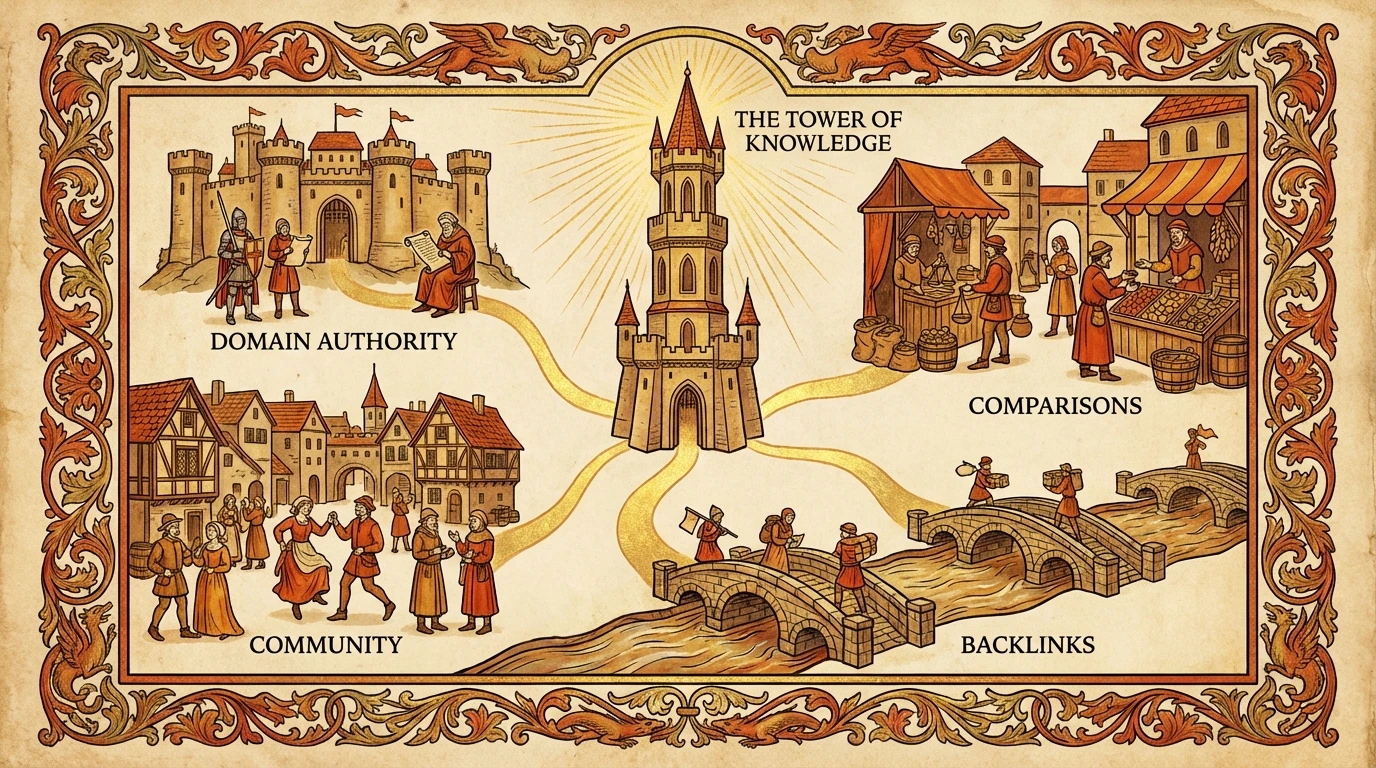
The Omnipresence Framework: Why AI Cites What It Finds Everywhere
The four surfaces that determine whether AI recommends you—or your competitors. A strategic framework for building AI visibility through multi-channel presence.
By Bijan Bina
Trust Signals for AI: A Practical Catalog
A complete catalog of trust signals that AI systems use to decide what to cite. Covers author credentials, source citations, editorial policies, freshness indicators, affiliations, and technical markup with implementation checklists.
By Bijan Bina
What is AEO? (Answer Engine Optimization)
AEO is the practice of structuring content so AI systems cite you as the source. Learn what answer engine optimization means and why it matters for AI visibility.
By Bijan Bina
What is AI Visibility? (And Why It Matters in 2026)
AI visibility is how often your brand appears in ChatGPT, Perplexity, and Google AI answers. Learn why 80% of AI citations come from outside Google's top 100, and how to get cited.
By Bijan Bina
AI Citations vs Mentions: What Actually Matters?
Learn the difference between AI citations and mentions, which metric matters more for your brand visibility, and how to track both across ChatGPT, Perplexity, and Google AI Overviews.
By Bijan Bina
AI-Readable Writing Style: Formatting Patterns That Get Quoted
Learn the specific formatting patterns—headings, definitions, bullet constraints, and evidence blocks—that make your content more likely to be cited by AI systems.
By Bijan Bina
My Brand Isn't Showing Up in AI Answers: Here's a Diagnostic Checklist
A systematic diagnostic checklist to identify why your brand isn't appearing in ChatGPT, Perplexity, and AI Overviews—plus actionable fixes for each issue.
By Bijan Bina
GEO Audit Checklist: 30 Things to Check Before You Publish
A systematic 30-point GEO audit checklist covering structure, extractability, proof density, technical accessibility, authority signals, and distribution readiness for AI citation.
By Bijan Bina
Healthcare AI Visibility: Why Patients Can't Find You in ChatGPT (And How to Fix It)
40 million Americans ask ChatGPT healthcare questions daily. Learn why healthcare traffic is disappearing into AI summaries and how to build AI visibility for your organization.
By Bijan Bina
50 ChatGPT SEO Prompts That Actually Work (Because They Produce a Backlog)
A ChatGPT SEO prompt library that creates a backlog, not just text. Rerunnable prompts for tracking AI visibility, forcing citations, and shipping fixes.
By Bijan Bina The Five-Pattern Operating System for AI-Augmented Agencies
How one operator with AI can outperform entire content teams. The five interlocking patterns behind Typescape's multi-client delivery system.
By Bijan Bina
ChatGPT SEO: The Complete Guide to Getting Mentioned (and Tracking the Queries)
Learn how to get cited in ChatGPT with a complete system: track visibility, engineer citable pages, build corroboration, and run a weekly loop.
By Bijan Bina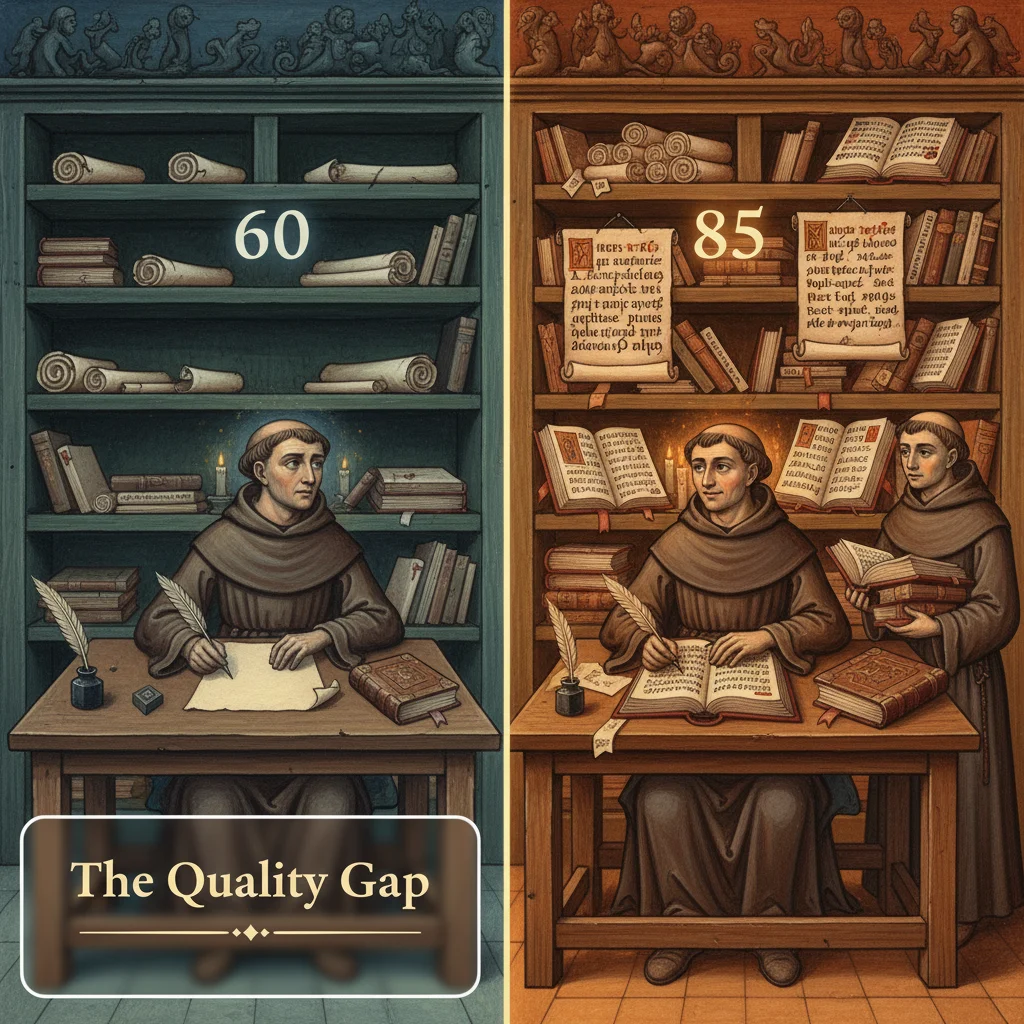
Why Your AI Workflows Get 60% and Ours Get 85%
Same model, same task, 25-point approval gap. The difference isn't prompt engineering. It's what your AI agent can access.
By Bijan Bina
SEO Prompt for ChatGPT: 7 Templates That Produce Citations (Not Fluff)
Stop prompting for content and start prompting for visibility. Get 7 ChatGPT SEO prompt templates that track citations, generate citable blocks, and turn AI visibility into weekly tickets.
By Bijan Bina
What Is Zero-Click Search? (And What to Measure When Clicks Disappear)
Zero-click search happens when users get answers directly on the SERP. Learn what it means in 2026, why clicks drop while rankings stay stable, and what to measure instead.
By Bijan Bina
Why Zero-Click Searches Happen (And What to Do When Clicks Disappear)
Zero-click searches happen when SERPs answer queries directly. Learn why CTR collapses while rankings stay stable, and how to measure and engineer visibility when clicks disappear.
By Bijan Bina
AEO vs GEO: The Differences Explained (and What to Do First)
AEO and GEO optimize different surfaces. Learn the real differences, what to measure when referrers disappear, and which one to start with.
By Bijan Bina
How to Compare AI Search Optimization Tools (Prompts, Drift, and Time-to-Fix)
Compare AI visibility tools by methodology and outcomes, not features. A rubric for prompt libraries, drift handling, and time-to-fix workflows.
By Bijan Bina
How to Do AEO (Answer Engine Optimization): A Step-by-Step Playbook to Get Cited
A practical 30-day AEO playbook: define your scoreboard, build extractable pages, engineer off-site corroboration, and run the measurement loop.
By Bijan Bina
Best AI Visibility Products for GEO: The Buyer's Rubric + Tool Shortlist (2026)
Cut through AI visibility tool confusion. Get a 9-question buyer's rubric, a shortlist of products worth evaluating, and a 30-day operating cadence.
By Bijan Bina
GEO Certification: Is It Worth It? A Decision Rubric for Marketers
A GEO certification is only worth it if it produces measurable visibility wins. Here's a rubric to evaluate any program, plus a 30-day operating system if you skip it.
By Bijan Bina
Generative engine optimization companies: who to hire (and what to demand before you sign)
A buyer's rubric for evaluating GEO agencies: what to measure, what deliverables to demand, and how to run a low-risk pilot before committing.
By Bijan Bina
GEO Services Guide: What to Expect from a Generative Engine Optimization Agency
What GEO services include, a 30/60/90-day rollout plan, how to measure AI citations, and how to choose a GEO agency without paying for activity.
By Bijan Bina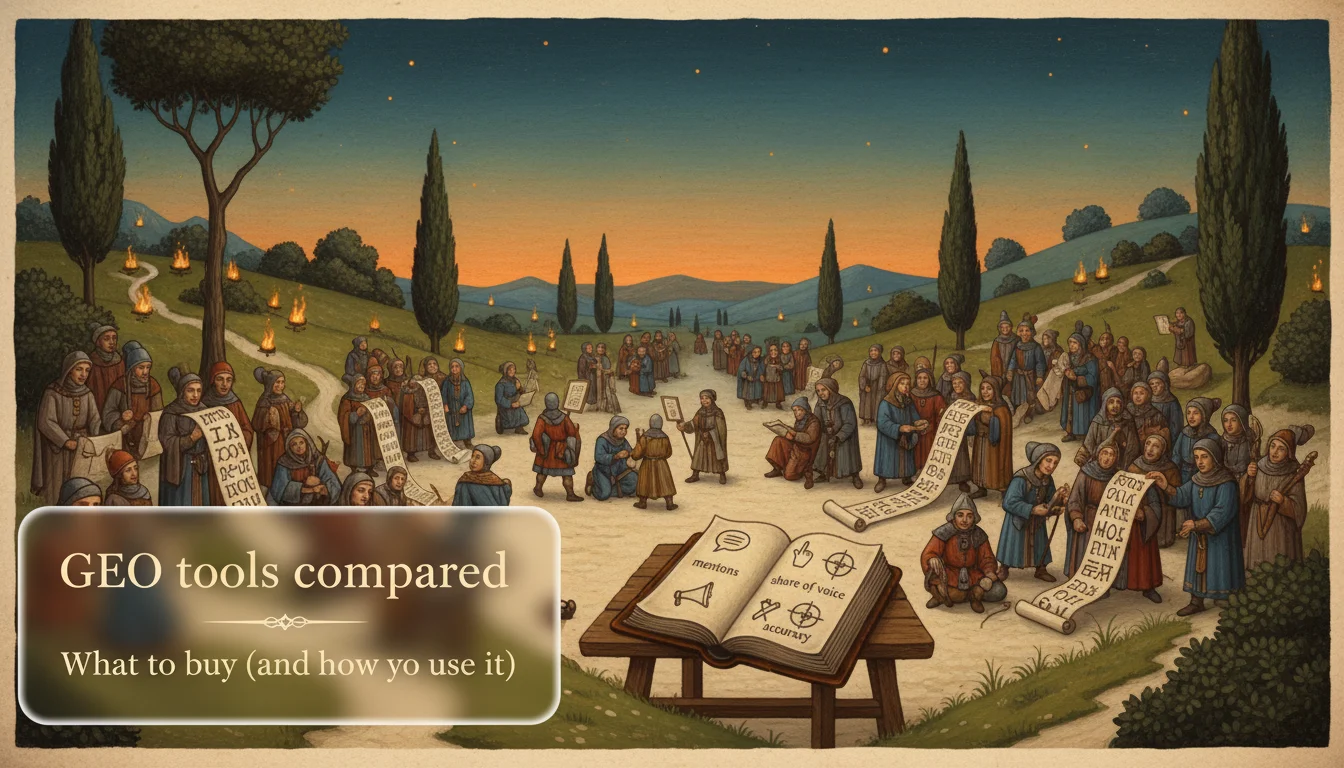
GEO tool buyer's guide: how to evaluate AI visibility tracking
Not another listicle. Learn how GEO tools actually measure AI visibility, what to look for before buying, and the weekly workflow that turns tracking into citations.
By Bijan Bina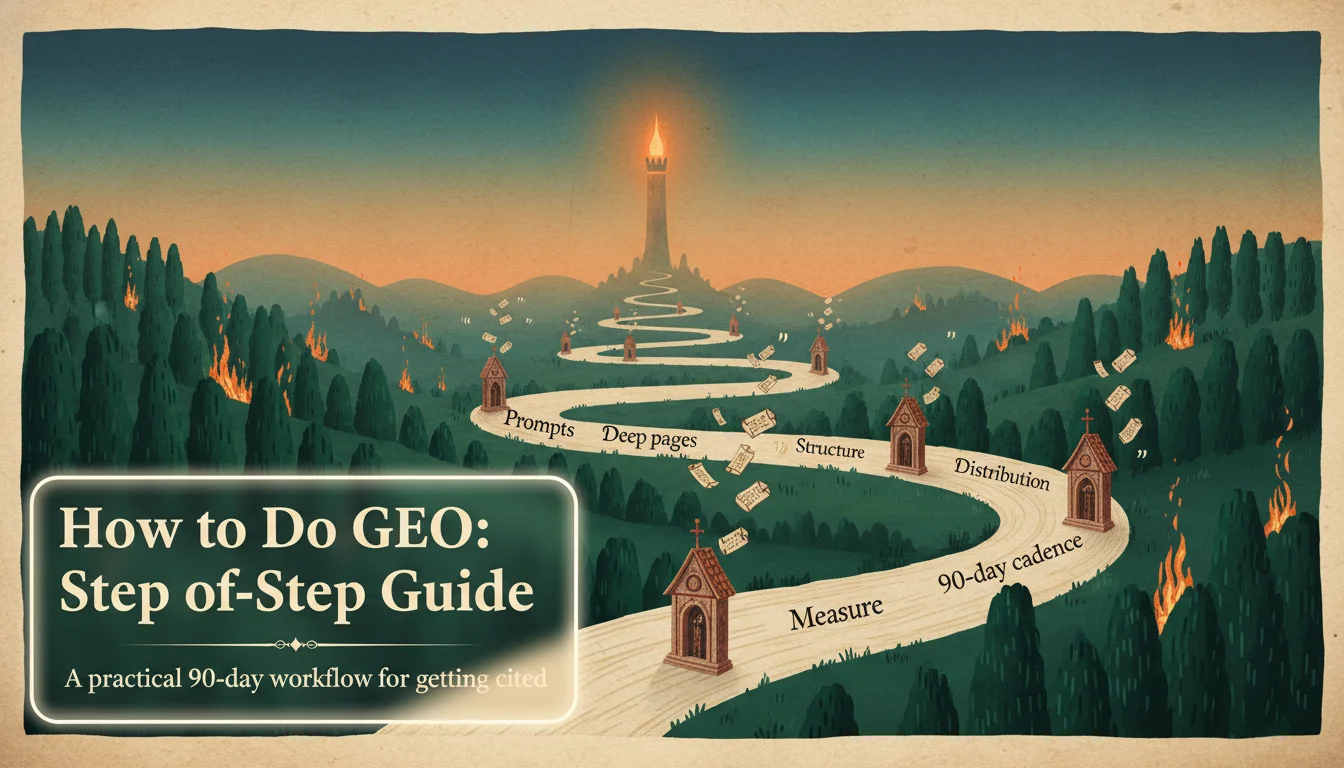
How to Do GEO: Step-by-Step Guide
A practical GEO workflow: build deep answer pages, add proof, distribute off-site, then measure citation share with a repeatable 90-day cadence.
By Bijan Bina
What is GEO? (Generative Engine Optimization)
GEO (generative engine optimization) helps your content get cited in AI answers like Google AI Overviews and ChatGPT. Definition, examples, and a 30-day starter plan.
By Bijan Bina
The Definitive Guide to GEO: Generative Engine Optimization
Learn what Generative Engine Optimization (GEO) is, why Princeton research proves it works, and how to boost AI visibility by 30-40%. Complete guide with tactics, tools, and measurement.
By Bijan Bina